We Have One Goal:
to Provide The Highest Quality,
Organic Products to our community
Concepts for the farm
Honey I’m Homestead emphasizes the use of renewable resources for conservation of soil and water to enhance the environment and our quality of our life. We use multiple relatively new concepts firstly; creating an ecosystem that is in balance to provide maximum nutrition, flavor, and value. Operating on organic principals, everything on the farm is repurposed, reclaimed, and renewed to enhance the environmental for future generations.
Plant Considerations
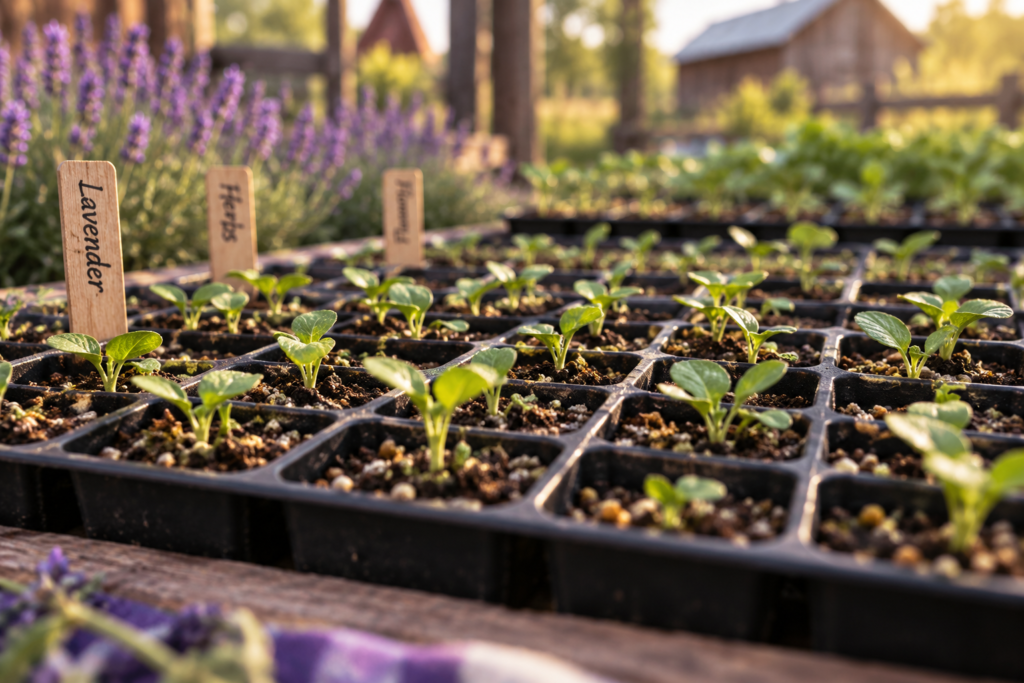
At Pine Meadows Farm, the needs of the plants come before our own preferences. Each crop is carefully matched to the areas of the farm where the soil, drainage, sunlight, airflow, and natural conditions give it the best opportunity to thrive. Sometimes that means choosing a location that may be less convenient or changing plans we had already made.
Our lavender fields are a perfect example. An area originally intended for a future barn proved exceptionally well suited for lavender, with predominantly sandy, fast-draining soil, good airflow from the prevailing winds, and soil conditions requiring relatively little amendment. Rather than asking the land to accommodate our plans, we chose to move the future barn and give the lavender the ground where it could naturally flourish.
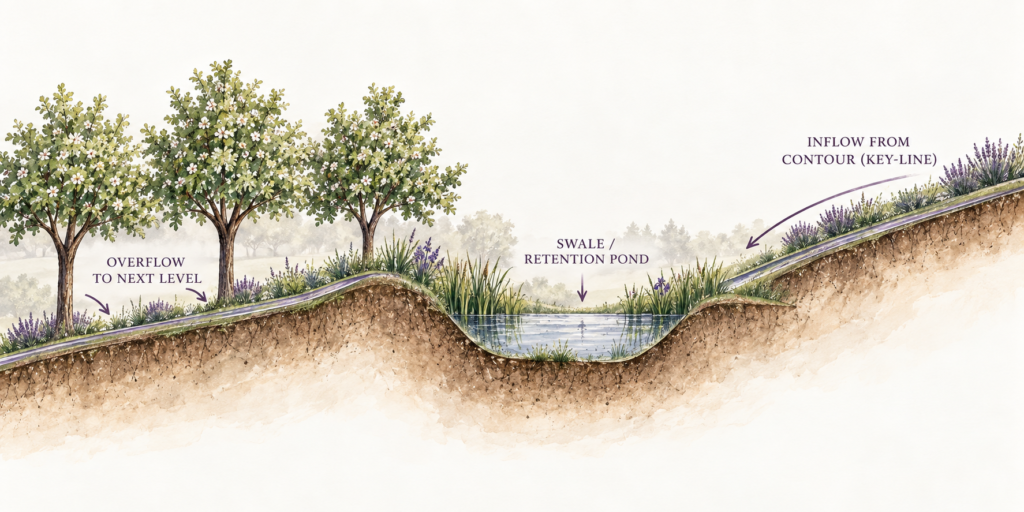
Key-line Design has been incorporated into the orchards for water retention and maximum percolation into the groundwater. Ditches have been strategically placed following the contour of the land to retain water and nourish the trees and plants. During excessive rainfall, spillways have been installed and routed through the property to central collection ponds. These ponds and spillways are in sequence in order of elevation for maximum retainment. One pond feeds the next before it eventually reaches the streams for discharge. Very rarely does water make it this far, most is absorbed into the ground or evaporates.
Permaculture
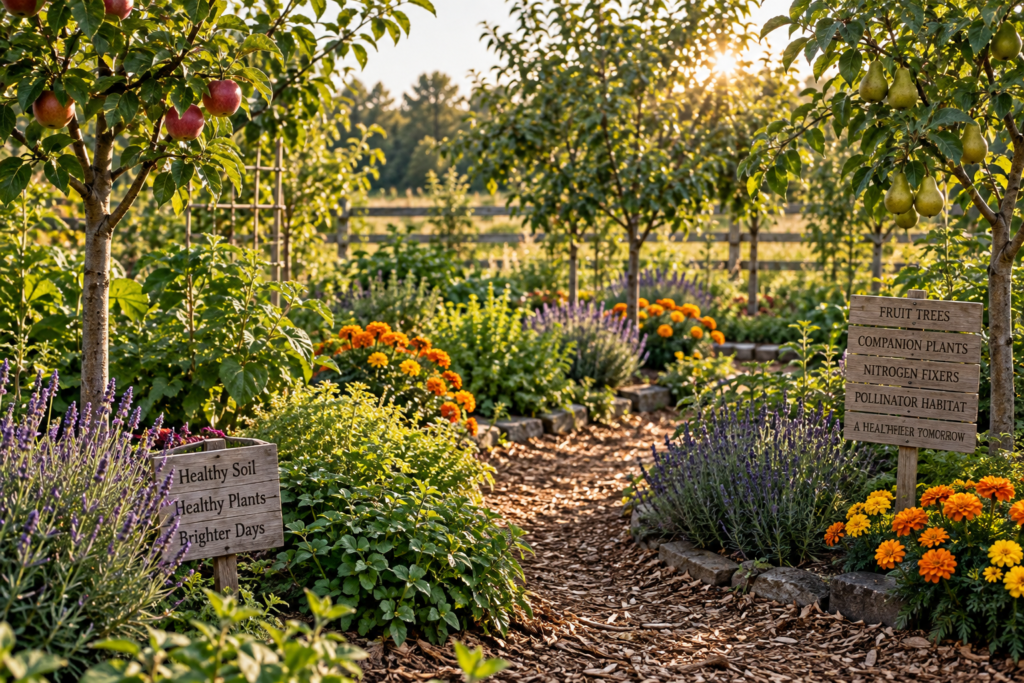
Permaculture principles are being incorporated throughout our new orchards to create a more balanced, self-supporting growing environment. Plants are intentionally selected and placed so they provide benefits to those around them—from nitrogen-fixing plants that naturally support nutrient-demanding neighbors to aromatic and flowering plants such as lavender, marigolds, and mums that help discourage certain pests and attract beneficial insects. By encouraging plants to work together, we aim to build healthier soil, increase biodiversity, reduce our reliance on outside inputs, and create orchards that become more resilient with each growing season.
Aquaculture
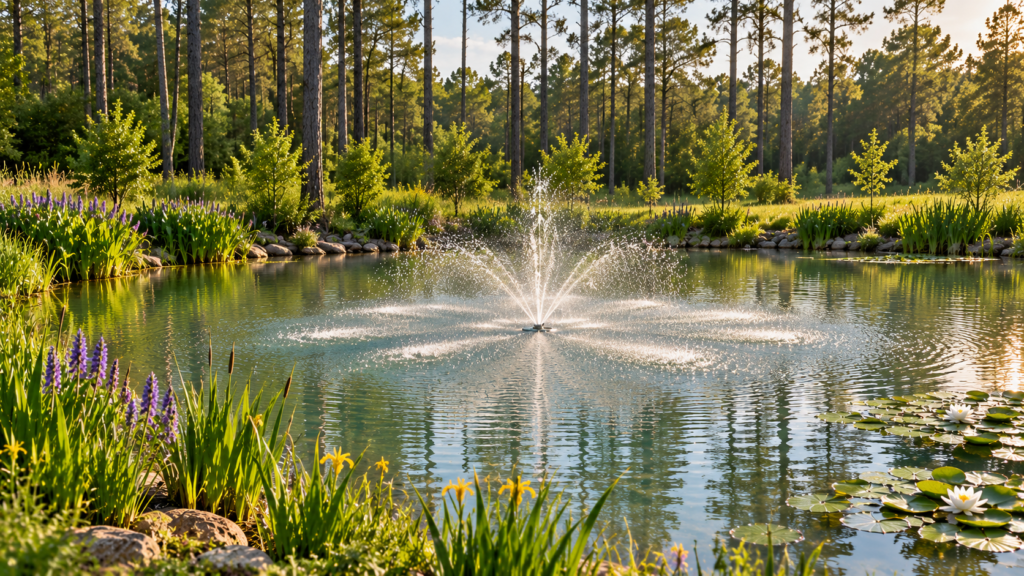
Our two stocked ponds—approximately 1½ acres and 1¼ acres—serve as important water resources for the farm. Several times throughout the year, nutrient-rich pond water is pumped to the highest points of the orchards and distributed through our keyline system. From there, the water follows the natural contours of the land, irrigating trees and surrounding plants while returning valuable organic nutrients to the soil. This integrated system helps conserve water, improve soil fertility, reduce dependence on outside inputs, and provide greater resilience during periods of drought.
Back to Eden
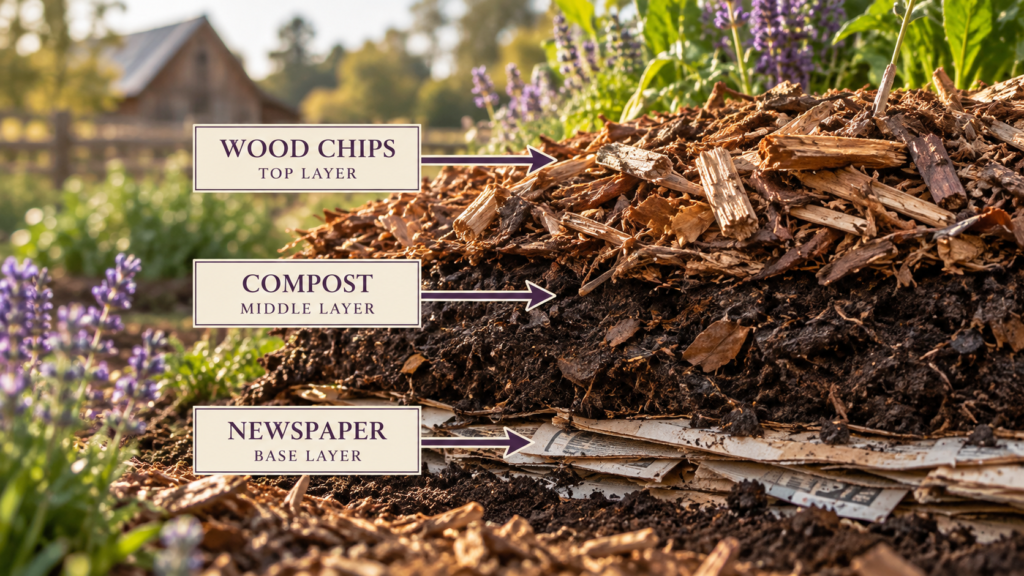
At Pine Meadows Farm, we use Back to Eden and wood-chip gardening principles to work with nature rather than against it. Layers of natural organic material protect and enrich the soil, helping conserve moisture, suppress weeds, reduce erosion, and gradually build fertility as they decompose. Over time, this creates healthier, more resilient soil while reducing the need for frequent watering and intensive cultivation.
Hugelkultur
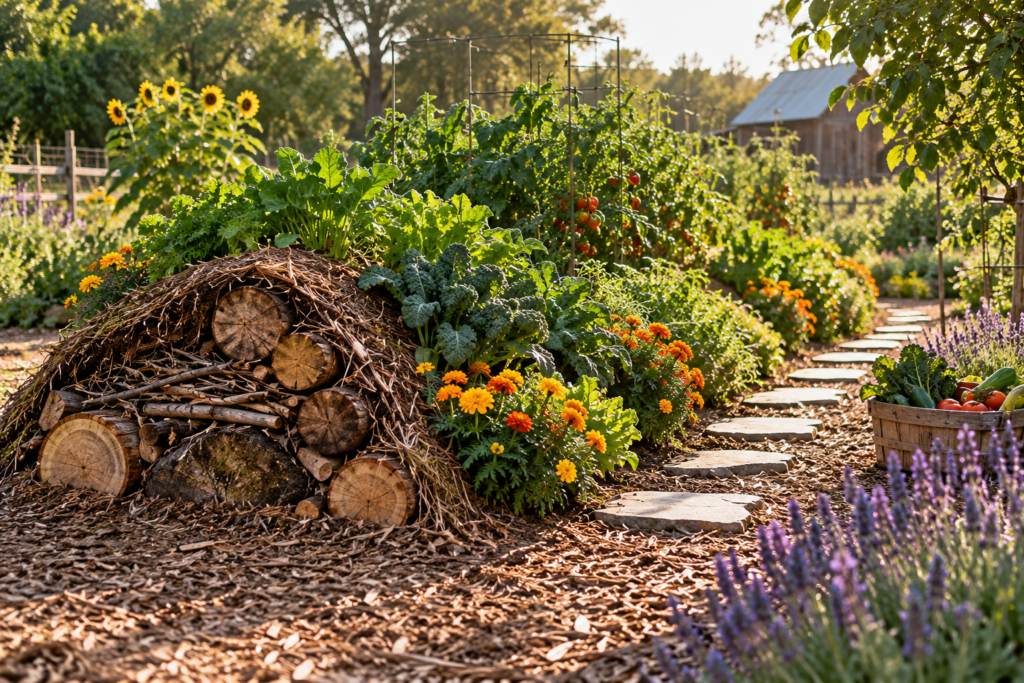
Hugelkultur is being explored at Pine Meadows Farm on a small, experimental scale rather than as a regular growing practice. In one low-lying flower bed, branches and other woody material were buried beneath topsoil to help raise the planting area while gradually adding organic matter as the wood decomposes. This trial allows us to observe how the technique performs in our soil and climate and determine whether it offers practical benefits for future problem areas around the farm.
Solar Power
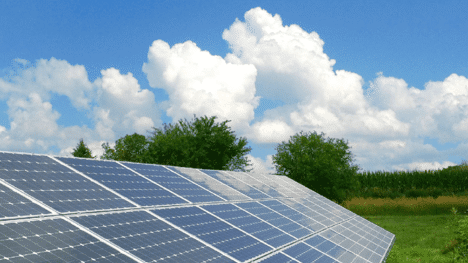
Solar: In 2018 we installed a new 5.5kw solar array on our barn roof that Hurricane Florence literally removed. Its location and orientation was an excellent choice, so we consulted an engineer and made revisions to the structure to support the load and windage. Now producing ½ our electrical needs, we are one step closer to going off grid.